Winter Bathroom Safety for Seniors: How to Prevent Slips & Falls
For most seniors, winter mornings are slow and quiet, the kind that calls for a warm shower to ease stiff joints. But the same warmth can hide a silent danger. Cold air, condensation, and slippery tiles combine to make the bathroom one of the riskiest places at home during this season. Winter bathroom safety becomes critical because the cold affects more than just comfort; it affects movement, reaction time, and balance. When the temperatures drop, muscles tighten, reflexes slow down, and even a small step on a damp floor can turn into a dangerous fall.
According to several healthcare studies, incidents of bathroom slips among seniors rise sharply in colder months. The reasons are simple yet serious: slippery floors, poor lighting during darker mornings, and limited mobility caused by low temperatures. Add layers of clothing or cold surfaces into the mix, and the risk only multiplies.
A single fall can have lasting consequences, including fractures, hospital stays, and a deep loss of confidence. But with awareness and small changes, these accidents are entirely preventable.
Understanding the Risk: Why Winter Is Tough on Seniors
Winter can be especially unforgiving for older adults. The cold doesn’t just chill the skin; it tightens muscles, slows reflexes, and limits flexibility. This combination makes simple movements, like stepping out of a shower or bending to reach a towel, much more difficult than usual.
When temperatures drop, mobility challenges in winter become real threats. Seniors often experience stiff joints, reduced blood circulation, and occasional dizziness when moving between warm and cold rooms. These subtle effects can throw off balance, making bathrooms, already slippery spaces, even more hazardous.
Even the environment changes. Moisture collects faster on cold surfaces, creating invisible slick spots on tiles and glass. Add to that the dim lighting of early mornings and the fatigue of shorter days, and you get a perfect storm for accidents.
According to health experts, elderly winter injury prevention requires extra attention to bathrooms because most home falls happen on wet, hard surfaces.
Common Bathroom Hazards During Winter
For most of us, a warm bath on a cold day feels comforting. But for seniors, that same space can quietly turn into a danger zone. The mix of water, cold air, and smooth tiles creates the perfect conditions for slips and falls, especially when the body moves more slowly and balance isn’t what it used to be.
1. Slippery, Cold Floors
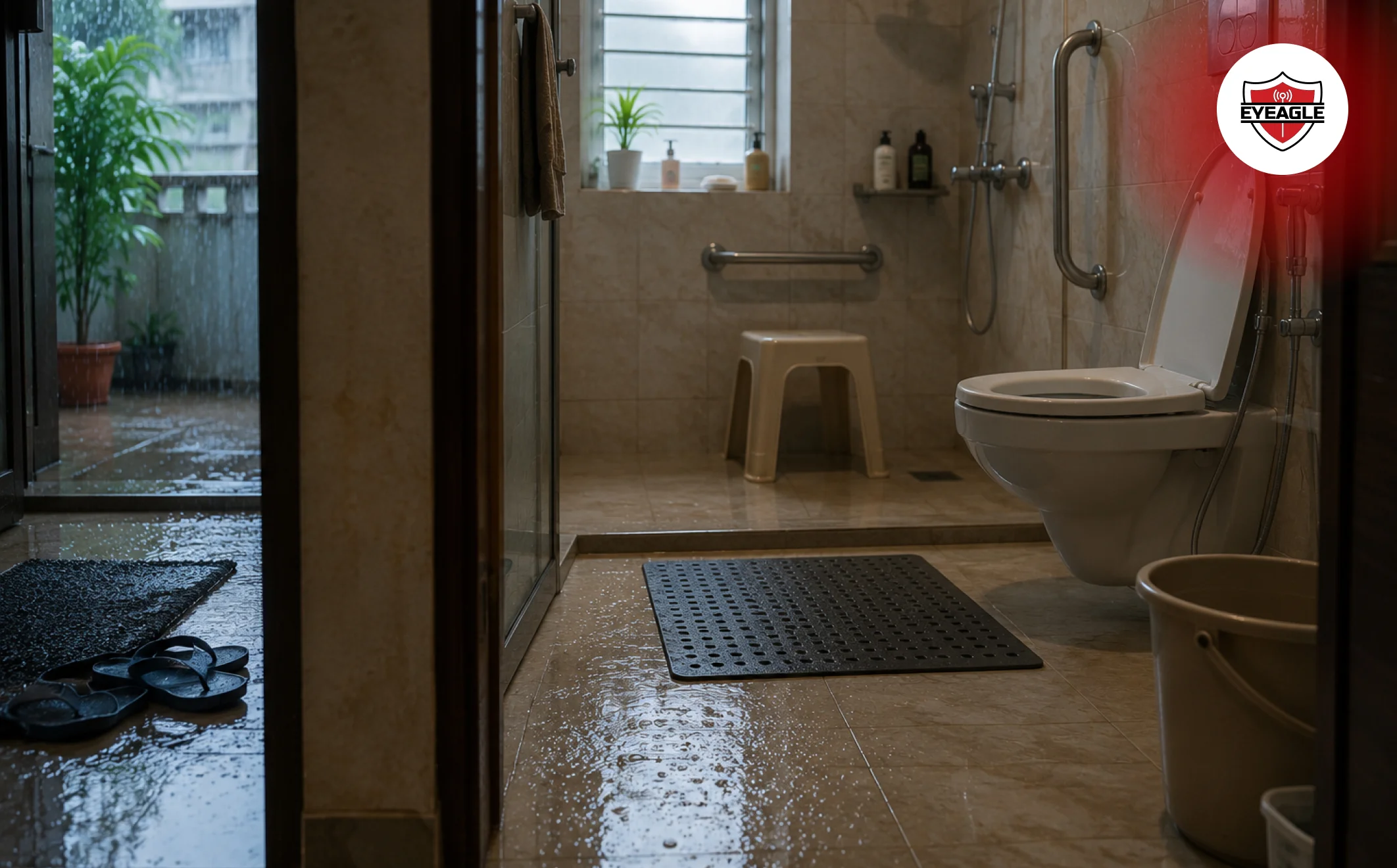
Condensation forms faster in low temperatures, turning bathroom tiles into invisible ice rinks. Seniors with reduced sensation in their feet may not notice moisture until it’s too late. To prevent slips in the bathroom, floors must be kept warm and dry after every use.
2. Poor Lighting During Early Mornings or Evenings
Winter means shorter days and dimmer mornings. Shadows can distort depth perception, making it hard for seniors to spot puddles or uneven surfaces, one of the biggest fall risks in the bathroom.
3. Lack of Stable Support Structures
Without sturdy grab bars for the elderly, seniors often rely on sinks, towel rods, or walls for balance, all unsafe options that can give way easily.
4. Temperature Shock
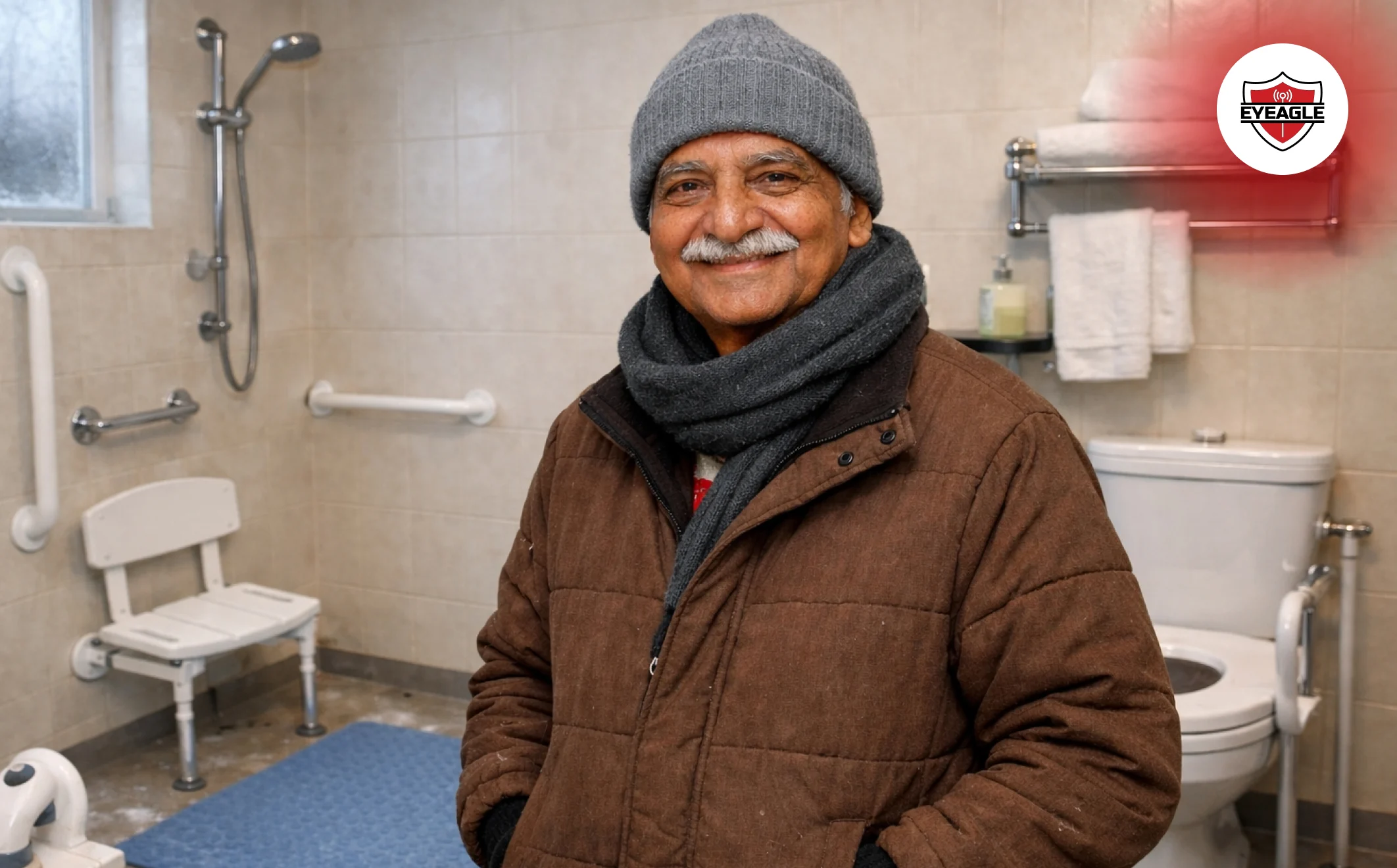
Moving from a warm room into a cold bathroom can cause sudden dizziness or light-headedness, especially in older adults with blood pressure issues. This is a key reason why keeping seniors safe during winter requires maintaining consistent indoor warmth.
5. Clutter and Poor Layout
Small rugs, misplaced buckets, or low storage shelves create unnecessary obstacles. These trip hazards become more dangerous when the floor is slippery or when mobility is limited.
Practical Winter Bathroom Safety Measures
When it comes to winter safety, prevention isn’t complicated; it’s consistent. A safe bathroom doesn’t start with expensive renovations; it starts with simple awareness, practical tools, and a few caring upgrades that put safety first.
Most falls happen in familiar spaces, which means small, thoughtful changes in design and routine can make a huge difference. The goal of winter bathroom safety isn’t to make homes look like hospitals, but to make them feel safer without sacrificing comfort or dignity.
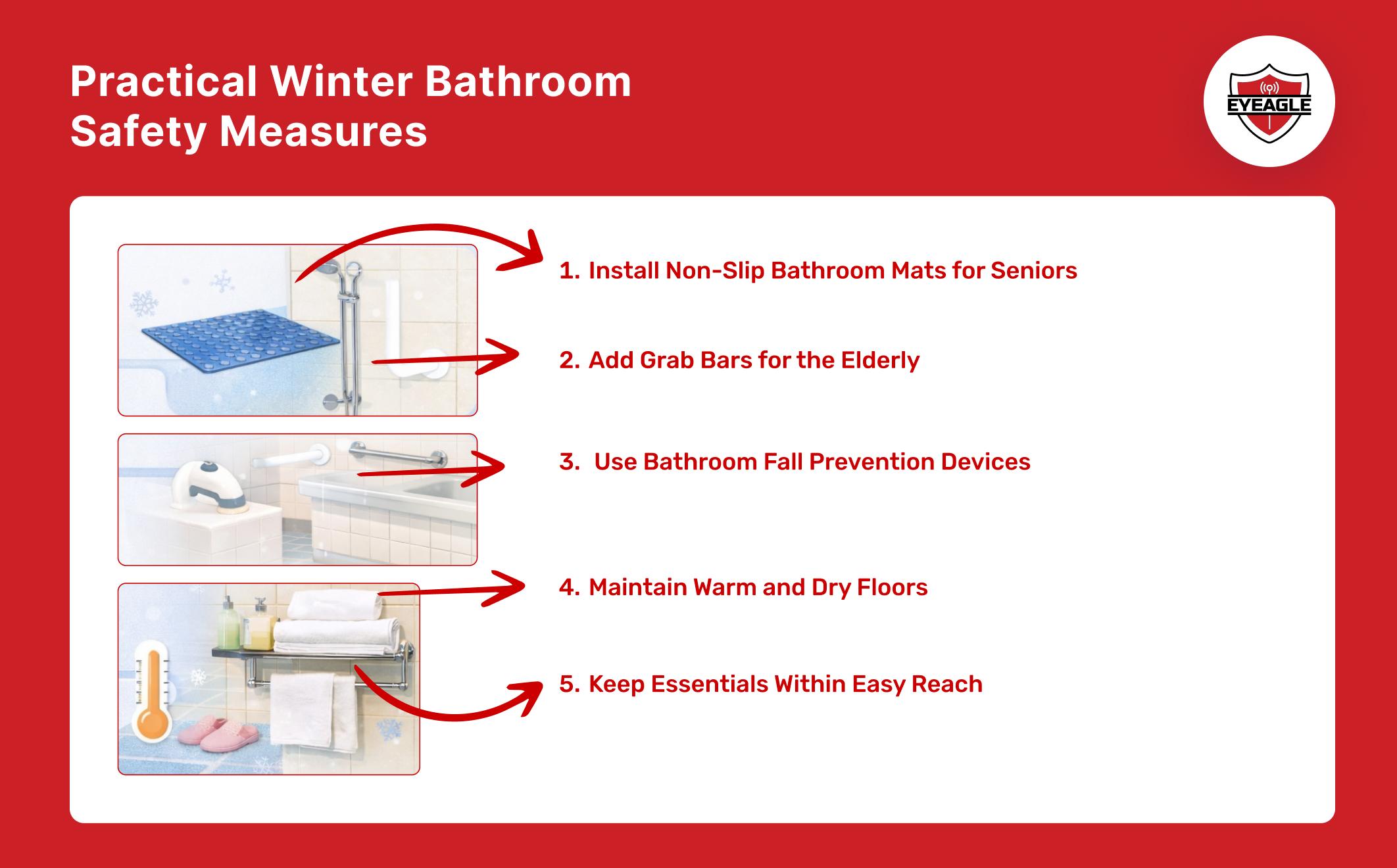
1. Install Non-Slip Bathroom Mats for Seniors
Ordinary cloth mats absorb water and slide easily, creating more danger than safety. Choose high-grip non-slip bathroom mats for seniors that stay firmly in place even when wet. Place them near the shower, sink, and toilet for full coverage.
2. Add Grab Bars for the Elderly
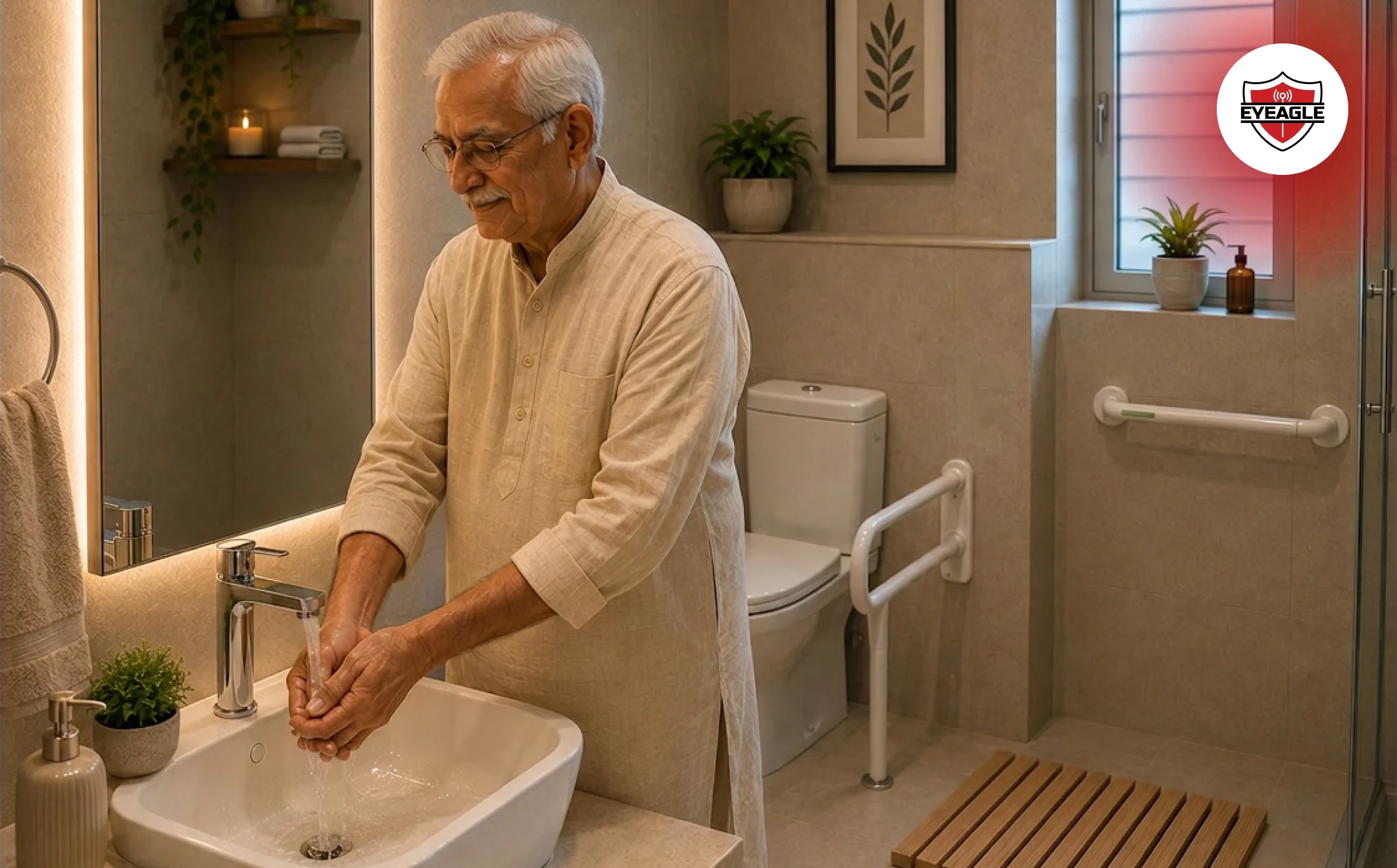
Bathrooms need solid, dependable support points. Install grab bars for the elderly near the shower, bathtub, and toilet so seniors have something stable to hold on to when standing or sitting.
Simple additions like EyEagle bathroom safety fittings, anti-slip mats, grab bars, and floor aids can transform a risky bathroom into a secure, confident space.
3. Use Bathroom Fall Prevention Devices
Consider adding motion-sensor lights, anti-skid coatings, and portable emergency buzzers for added security.These bathroom fall prevention devices are affordable, easy to install, and work quietly in the background to protect seniors.
4. Maintain Warm and Dry Floors
Use small exhaust fans or heaters to reduce condensation. After every shower, ensure the floor is wiped dry. Warm, dry floors drastically reduce slip risks, especially for seniors with slower reflexes or weak balance.
5. Keep Essentials Within Easy Reach
Store towels, soap, and clothes at waist level to avoid bending or stretching. This simple change prevents imbalance and unnecessary strain.
Health and Routine: Building Safer Habits
Even the safest bathroom can’t protect someone whose body isn’t ready to move with confidence. True safety begins with health, strength, flexibility, and mindful routines that prepare seniors for the physical demands of winter.
1. Gentle Morning Stretches
Before heading to the bathroom, encourage light movements, shoulder rolls, ankle rotations, or slow leg lifts. These help loosen stiff joints and improve balance, especially for those with mobility challenges in winter.
2. Stay Hydrated and Eat Balanced Meals
Cold weather often masks thirst, but dehydration can cause dizziness or muscle cramps. Proper hydration and a nutrient-rich diet (with calcium, protein, and vitamin D) maintain muscle control and coordination, key to reducing fall risks in the bathroom.
3. Maintain a Consistent Routine
Regular sleep, predictable meal times, and planned shower hours help the body adjust and move steadily throughout the day. Sudden changes in temperature or timing often cause discomfort or instability.
4. Involve Family and Caregivers
Winter is not the season for seniors to be left unattended, especially in slippery areas. Encourage short check-ins or quick assistance when needed. Care is not dependency, it’s precaution.
Final Thoughts: Warmth, Awareness, and Safety
Winter brings with it cozy moments, the smell of hot tea, soft blankets, and quiet mornings. But for seniors, it can also bring hidden risks that turn comfort into concern. A single bathroom slip can change everything, not just physically, but emotionally.
That’s why winter bathroom safety isn’t just about equipment or precautions; it’s about mindfulness. Keeping bathrooms warm, floors dry, and routines steady helps create an environment where seniors can move freely and confidently, even on the coldest days. Families play the biggest role in prevention, through awareness, gentle reminders, and genuine attention. The smallest act, like drying a wet floor or ensuring proper lighting, can prevent life-altering accidents.
At EyEagle, we believe every winter should feel safe, comforting, and full of life for the seniors who’ve built our homes with love.